
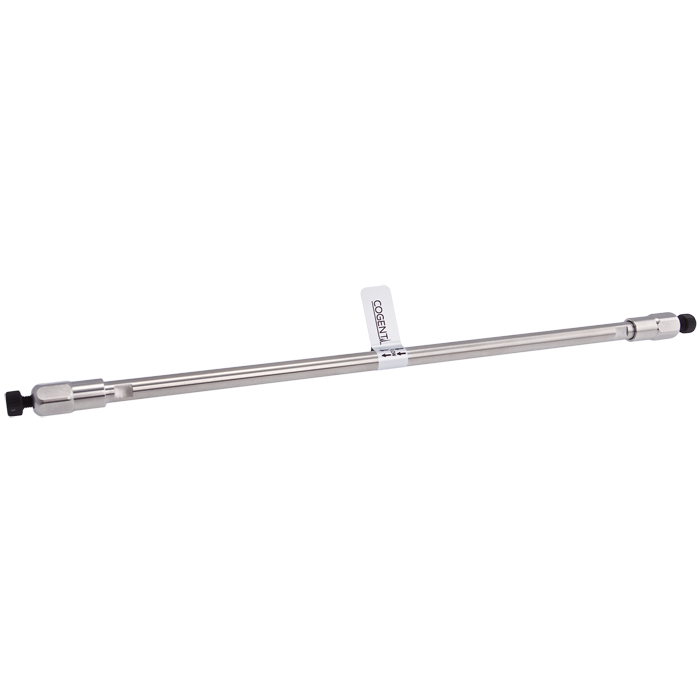
HPLC Column, RP PFP, 10um, 4.6mm ID x 250mm Length, 100A. Cogent Brand. 1 EA.
Additional Information:
68022-25P Cogent RP PFP™ HPLC Column has been a premium value trusted by HPLC laboratories for many years, delivering reliable performance and enhanced selectivity for complex analytical separations. This column is fully double end‑capped and bonded via a four‑carbon linker to a benzene ring substituted with five fluorine atoms, using ultra‑high purity silica.
The column provides multiple retention mechanisms—including π‑π interactions, dipole interactions, and hydrogen bonding—making it especially effective for halogenated, aromatic, and polar analytes. It is also suitable as an alternate column for USP methods requiring L43 classification.
With a 10 µm particle size, this column offers very low backpressure compared to smaller particle columns, allowing higher flow rates and improved compatibility with standard HPLC systems and those with pressure limitations.
250 mm Length – Maximum Resolution for Complex Separations
The 250 mm length provides the highest resolving power, ideal for challenging separations and complex sample matrices.
Maximum resolution compared to shorter column formats
Superior separation of closely related and co-eluting compounds
Increased peak capacity for complex analytical samples
✅ Recommended for impurity profiling and high-resolution analytical workflows
Flow Rate & System Requirements (4.6 mm ID, 10 µm)
⚠️ Designed for low-pressure, high-flow operation
Typical flow rate range: ~1.0 – 2.0 mL/min
Very low backpressure vs 5 µm and 3 µm columns
Increased pressure due to longer column length, but still manageable
Compatible with UV and standard analytical detectors
✅ Best Practice: Filter samples using a 0.2 µm syringe filter prior to injection
Why Choose PFP (F5) Columns for Selective Separations
Enhanced Retention for Halogenated Compounds
Strong interaction with halogenated and fluorinated analytes
Improved selectivity vs C18 columns
Multiple Interaction Mechanisms
π‑π interactions for aromatic compounds
Dipole interactions and hydrogen bonding
Greater flexibility for method development
100 Å Pore Structure
Suitable for small to moderately sized molecules
Broad applicability across analytical workflows
Cogent RP PFP™ Column Advantages
Fully End‑Capped Surface
Minimizes silanol activity
Improves peak symmetry
Low Backpressure (10 µm Particles)
Enables high flow rate operation
Reduces system strain
High Purity Silica
Consistent chromatographic performance
Reliable reproducibility
Typical Applications
High‑flow analytical methods
Halogenated compound analysis
Aromatic compound separations
Impurity profiling and method development
USP L43 methods